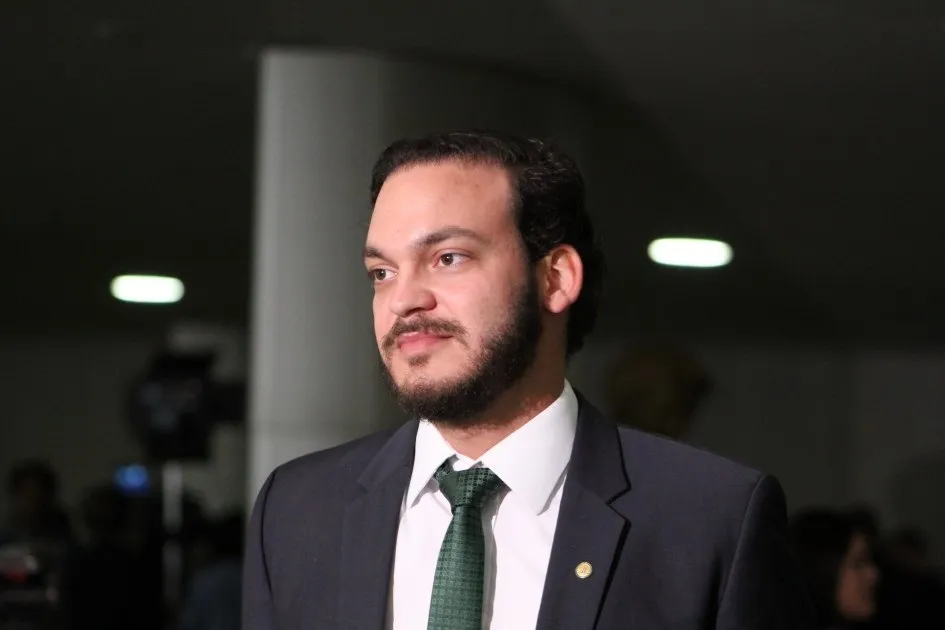
Family members and supporters seek intervention from the UN, Amnesty International, Human Rights Watch, FIDH, the International Committee of the Red Cross, and the Inter-American Human Rights System
Salvador, Bahia (Brazil) – A series of complaints concerning the detention conditions of former federal congressman Uldurico Alencar Pinto at the Salvador Male Penitentiary Complex is expected to be submitted to some of the world’s most prominent human rights organizations.
Relatives, supporters, and representatives of organizations dedicated to the protection of fundamental rights state that there is growing concern regarding the physical and psychological well-being of the former lawmaker, citing alleged incidents of assaults, intimidation, and threats to his safety within the prison facility.
According to the complainants, the case requires immediate and independent monitoring by national and international bodies due to the seriousness of the allegations and the need to ensure compliance with principles established by the Brazilian Constitution, the Penal Execution Law, and international human rights treaties ratified by Brazil.
The private company Socializa Brasil, which manages the Salvador Male Penitentiary Complex (CPMS), where the inmate is currently held, also administers four other correctional facilities and receives substantial public resources due to the magnitude of its responsibilities. According to the allegations, the large prison population under its administration could be vulnerable to political and partisan interests amid Brazil’s intense electoral polarization.
Supporters claim that the inmate’s father is a pre-candidate for Federal Deputy representing the REDE–PSOL political alliance, described as a political adversary of groups allegedly connected to Socializa Brasil. They further allege that the company’s owners maintain ideological and personal relationships with political actors opposed to the prisoner’s family, leading them to characterize the former congressman as a political prisoner of his adversaries. They argue that this is an extremely serious situation with potentially unpredictable consequences.
CALL FOR INTERNATIONAL INTERVENTION
Among the organizations expected to receive reports and requests for monitoring are:
* Amnesty International;
* Human Rights Watch;
* International Federation for Human Rights (FIDH);
* International Committee of the Red Cross (ICRC);
* United Nations Human Rights Council;
* Office of the United Nations High Commissioner for Human Rights (OHCHR);
* Inter-American Commission on Human Rights (IACHR);
* Inter-American Court of Human Rights.
The submitted documents seek monitoring, independent analysis, and, if necessary, measures aimed at protecting the detainee’s physical and psychological integrity, as well as evaluating the general detention conditions within the prison facility.
CONCERNS REGARDING PHYSICAL AND PSYCHOLOGICAL INTEGRITY
Supporters emphasize that the complaints extend beyond the individual situation of the former congressman.
According to them, the case raises broader concerns about the treatment of incarcerated individuals, particularly in situations involving allegations of violence, emotional vulnerability, or the need for specialized medical care.
Advocates for an investigation argue that any allegation involving possible violations of fundamental rights should be examined by independent institutions in order to ensure transparency and credibility.
HUMAN RIGHTS ADVOCACY BACKGROUND
Supporters also highlight that Uldurico Alencar Pinto serves as president of the Human Rights Defense Institute (IDIREI), an organization that, according to its members, has conducted monitoring and oversight activities in correctional facilities throughout Bahia.
They note that access to prison facilities was legally authorized under Article 68 of Brazil’s Penal Statute, which grants prison directors discretionary authority to authorize visits.
According to members of the organization, its activities have included reporting on prison conditions, assisting inmates, and monitoring cases considered particularly sensitive from a human rights perspective.
Supporters argue that this background reinforces the need for the current allegations to be examined rigorously, impartially, and independently.
THE CASE OF JONEUMA NERES IS ALSO MENTIONED
Among the issues raised by supporters is the situation involving inmate Joneuma Neres.
According to accounts provided by individuals familiar with the case, the detainee allegedly experienced severe emotional distress during her incarceration, circumstances that, according to the complainants, would have required specialized medical and psychological care.
Human rights advocates argue that incarcerated women, especially those with young children, deserve special protection from the State, in accordance with humanitarian standards established under Brazilian law and international treaties.
Supporters further contend that testimony provided in the case demonstrated that the former congressman held no public office at the relevant time, was not involved in drug trafficking, and maintained communication with multiple criminal factions without belonging to any of them. They argue that members of rival criminal organizations do not typically cooperate with competing factions due to intense rivalries that often result in riots, strikes, and violence.
The complainants further allege that prosecutors may have been led into a serious factual error, potentially subjecting aspects of the case to future scrutiny by national and international tribunals.
They point to the situation of a mother suffering from severe psychiatric conditions, incarcerated with a newborn child in a prison in Itabuna while her other adolescent daughter remained alone in the city of Teixeira de Freitas, more than 400 kilometers away and allegedly exposed to significant risks.
According to information cited by supporters, there were reports of suicide attempts allegedly resulting from pressures imposed by individuals who should have been responsible for safeguarding her rights as a woman and a mother.
They also argue that the same prosecutorial authorities involved in obtaining her testimony were connected to decisions denying her request for house arrest, allegedly contrary to guidance issued by Brazil’s National Council of Justice (CNJ).
Supporters additionally question the absence of psychiatric reports in the court records, despite the apparent involvement of mental health professionals during the proceedings.
APPEAL FOR TRANSPARENCY AND OVERSIGHT
The complainants emphasize that they are not seeking privileges or special treatment, but rather the observance of rights guaranteed to all persons deprived of liberty.
For this reason, they advocate for independent inspections by oversight agencies, legal representatives, the Public Defender’s Office, the Public Prosecutor’s Office, human rights councils, and other competent institutions.
According to supporters, transparency is the most reliable path toward establishing the facts, protecting fundamental rights, and strengthening public confidence in the institutions responsible for administering justice and managing the prison system.
At present, these allegations remain the subject of complaints awaiting investigation by the competent authorities, and no official conclusions have yet been reached regarding the reported events.