His father—a physician and a member of the 1988 Constituent Assembly—is demanding clarification regarding an accident that occurred within the prison, which allegedly involved a loss of consciousness, as well as information on neurological examinations and medical care provided. The Public Prosecutor’s Office, the National Council of Justice (CNJ), the National Council of the Public Prosecution Service (CNMP), the Office of the President of the Republic, and various national and international organizations are among the recipients of this formal notification.

The health status of Uldurico Alencar Pinto—known as Uldurico Júnior, a former two-term federal deputy and current president of IDIREI (Institute for the Defense of Human Rights)—has become a source of growing concern for his family.
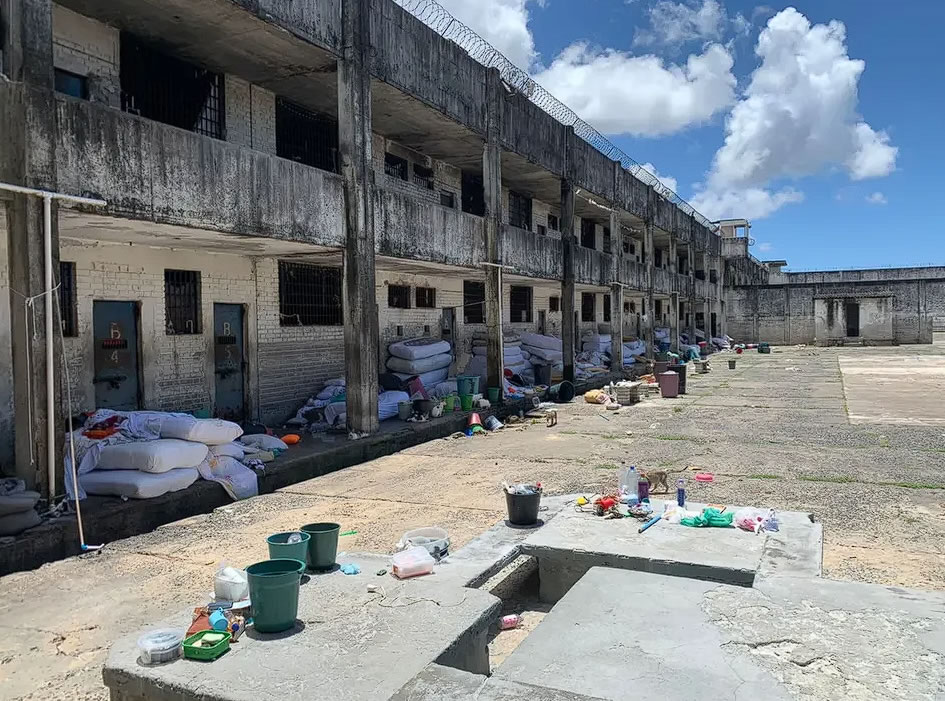
While in custody at the Salvador Men’s Penal Complex (CPMS), Uldurico reportedly suffered an accident in November that resulted in a head injury, lacerations, and a loss of consciousness. As these details have yet to be officially clarified, his father has issued a formal institutional notification and inquiry, demanding urgent action.
The incident raises a critical question: what were the consequences of the trauma, and what examinations were conducted to assess the inmate’s neurological condition?
The family is seeking access to medical records, documentation of the procedures followed, and the assessments made by the professionals in charge. Most importantly, they want to know whether there has been an adequate investigation into the potential long-term effects of the head injury and the reported loss of consciousness.
The request also includes the preservation of—and access to—security camera footage to clarify the circumstances of the accident, the moment Uldurico allegedly lost consciousness, and the medical assistance provided immediately thereafter.
CONTROLLED MEDICATION AND CONCERNS REGARDING MENTAL HEALTH
The family’s concerns extend beyond the accident itself.
Uldurico requires the use of prescription (controlled) medication and is in need of specialized medical monitoring. According to his father, the family has been requesting information regarding the treatment, prescriptions, dosages, consistency of medication supply, and the frequency of medical evaluations—yet they have not received any explanations deemed sufficient.
The father seeks to know whether there has been any interruption in the administration of medication, changes to dosages, or any failure to ensure the continuity of care.
He also requests an updated medical assessment and neurological follow-up, particularly in light of a reported incident involving a traumatic brain injury.
The demand is straightforward: to ascertain the actual health status of a man who is under the responsibility of the State.
A CAMPAIGN REACHING BRASÍLIA AND INTERNATIONAL ORGANIZATIONS
Faced with a lack of satisfactory responses, the family has expanded its efforts by preparing a formal institutional notification, which has been distributed to various Brazilian authorities.
Recipients include:
* The Public Prosecutor’s Office of Bahia and its Internal Affairs division;
* The National Council of Justice (CNJ);
* The National Council of the Public Prosecutor’s Office (CNMP);
* The Office of the President of the Chamber of Deputies;
* The Office of the President of the Federal Senate;
* The Office of the President of the Republic;
* The Governor of Bahia;
* The Ministry of Justice;
* The Ministry of Human Rights;
* The Court of Justice of Bahia;
* The Office of the Prosecutor General of the Republic;
* The Federal Public Defender’s Office;
* The Brazilian Bar Association (OAB);
* The National Human Rights Council;
* The National Mechanism for the Prevention and Combating of Torture.
The initiative also includes outreach to various national and international organizations, such as Amnesty International, Human Rights Watch, Conectas Human Rights, Global Justice (Justiça Global), the Prison Pastoral Care (Pastoral Carcerária), the United Nations (UN), the Office of the UN High Commissioner for Human Rights, and the Inter-American Commission on Human Rights.
The family is requesting that these institutions consider monitoring the situation, conducting oversight, and taking any appropriate measures. A FATHER, A PHYSICIAN, AND A MEMBER OF THE 1988 CONSTITUENT ASSEMBLY
Behind this initiative lies a circumstance that gives the document a particularly personal significance.
Uldurico Júnior’s father is a physician who served in the 1988 National Constituent Assembly. According to his account, he took part in drafting the legislation that established the Unified Health System (SUS) and, during the constituent proceedings, advocated for strengthening the powers of the Brazilian Public Prosecutor’s Office.
Now, decades later, he finds himself in the position of a father who must turn to the very institutions he helped strengthen in order to obtain information about his own son’s health.
In his document, he expresses frustration over the lack of responses, yet states that he has no intention of entering into a confrontation with the authorities.
He is calling for transparency, medical care, and compliance with the law.
The formal notice includes a sentence that encapsulates his position:
“I do not want a confrontation. I want answers.”
A FAMILY HISTORY MARKED BY THE DEFENSE OF DEMOCRACY
The document also recounts the family’s historical trajectory.
Uldurico Júnior’s maternal uncle, Heitor Cavalcanti Alencar Furtado—a former federal deputy for the state of Paraná—was murdered by a police officer while still serving in office.
His maternal grandfather, Alencar Furtado, also a former federal deputy, had his mandate revoked during the military dictatorship.
The family history also includes the story of Francisco Pinto, a former mayor of Feira de Santana and former federal deputy, who was likewise targeted by the political repression of the military regime.
For his father, these episodes are part of a multi-generational history of individuals who faced persecution, violence, and the curtailment of democratic freedoms.
It is within this context that he frames his current concern regarding his son’s physical and mental well-being.
WHAT DOES THE FAMILY WANT TO KNOW?
Among the primary demands presented to the authorities are:
1. What exactly happened to Uldurico during the incident in November?
2. Did he suffer a traumatic brain injury accompanied by a loss of consciousness?
3. What neurological examinations were performed?
4. Was a computed tomography (CT) scan performed or recommended?
5. What medical procedures were carried out?
6. Is there any footage of the incident or the subsequent medical response?
7. What controlled medications are being administered?
8. Has there been any interruption or change to his treatment?
9. When was his last psychiatric evaluation conducted?
10. Is there a recommendation for hospital-based or specialized care?
The family considers these questions essential to understanding the current health status of the individual in custody.
IMPRISONMENT DOES NOT SUSPEND THE RIGHT TO HEALTH
The Federal Constitution and the Penal Execution Law guarantee that individuals deprived of their liberty have the right to medical care and the preservation of their physical and moral integrity.
The responsibility for custody also entails a duty of protection. For this reason, the family believes that information regarding the accident, medical examinations, and treatment cannot remain unclear indefinitely.
The matter is now being brought before various authorities, with requests for oversight and institutional monitoring.
The primary concern is neither political nor partisan; it is a matter of human welfare and medical care.
A man is currently in state custody. There are reports of a head injury, other wounds, and a loss of consciousness. There is also concern regarding the administration of prescription medications and the continuity of his specialized medical care.
The family seeks to know what occurred, what measures have been taken, and the current state of Uldurico Alencar Pinto’s health.
The father concludes his statement with a message that encapsulates the entire effort:
“Imprisonment may restrict one’s freedom of movement, but it cannot strip away the right to health, dignity, and protection. I am a father, I am a physician, and I have a duty to fight for my son’s life and well-being.”
BY: EDITORIAL STAFF